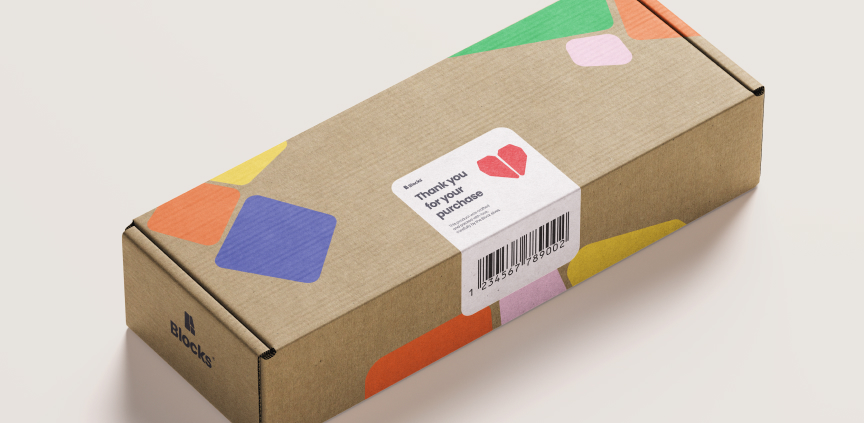
At first glance they’re subtle, yet when used effectively, stickers can become a powerful carrier for your brand. Stickers are more than just advertising – they’re part of the experience your customer takes away with the product. Here are some tips to make the most of stickers in product marketing.
✔️ Part of the packaging
A sticker doesn’t have to be only a visually striking packaging label. You can also add interesting logo stickers to the package as a small gift; or, if you wrap the product in paper, seal it with your sticker featuring the logo and a thank-you.
✔️ Offline marketing
Use stickers as offline promo. Print a QR code on them that links to your e-shop. Distribute stickers at events, festivals, and places where your target audience is. If they’re eye-catching, funny, or pretty, people will take them without asking – and stick them for you :-)
At Expresta, we print stickers on paper, vinyl, or polypropylene (PP). You can also choose from various shapes and sizes and tailor the surface finish, so it works for any surface, indoors, or outdoors. And if you want your stickers to truly stand out, consider spot UV, metallic foil or a combination of the two. Get an instant quote from our online calculator.

Frequently asked questions about stickers
1. Are stickers waterproof?
It depends on the material and finish. Vinyl stickers with lamination are typically waterproof, scratch-resistant and UV-resistant and are suitable for outdoor use; some manufacturers state they can handle a dishwasher (top rack), but material and adhesive quality are always key.
2. Which material should I choose – paper, PP or vinyl?
Paper stickers are cost-effective and suitable for indoor, short-term use. Polypropylene (BOPP/PP) is thinner and very flexible, resists grease, water, and chemicals and is popular in packaging labels. Vinyl (PVC) is thicker and generally the most durable against water and UV, making it ideal for long-term and outdoor applications.
3. How should I prepare the print files, so the result isn’t blurry?
To get great results the first time, prepare the artwork in CMYK, at 1:1 scale with at least 300 DPI, and add ~3 mm bleed. Keep key elements within the safe area and send us any logos or fine lines as vectors. This prevents blur, pixelation and unwanted white edges.


